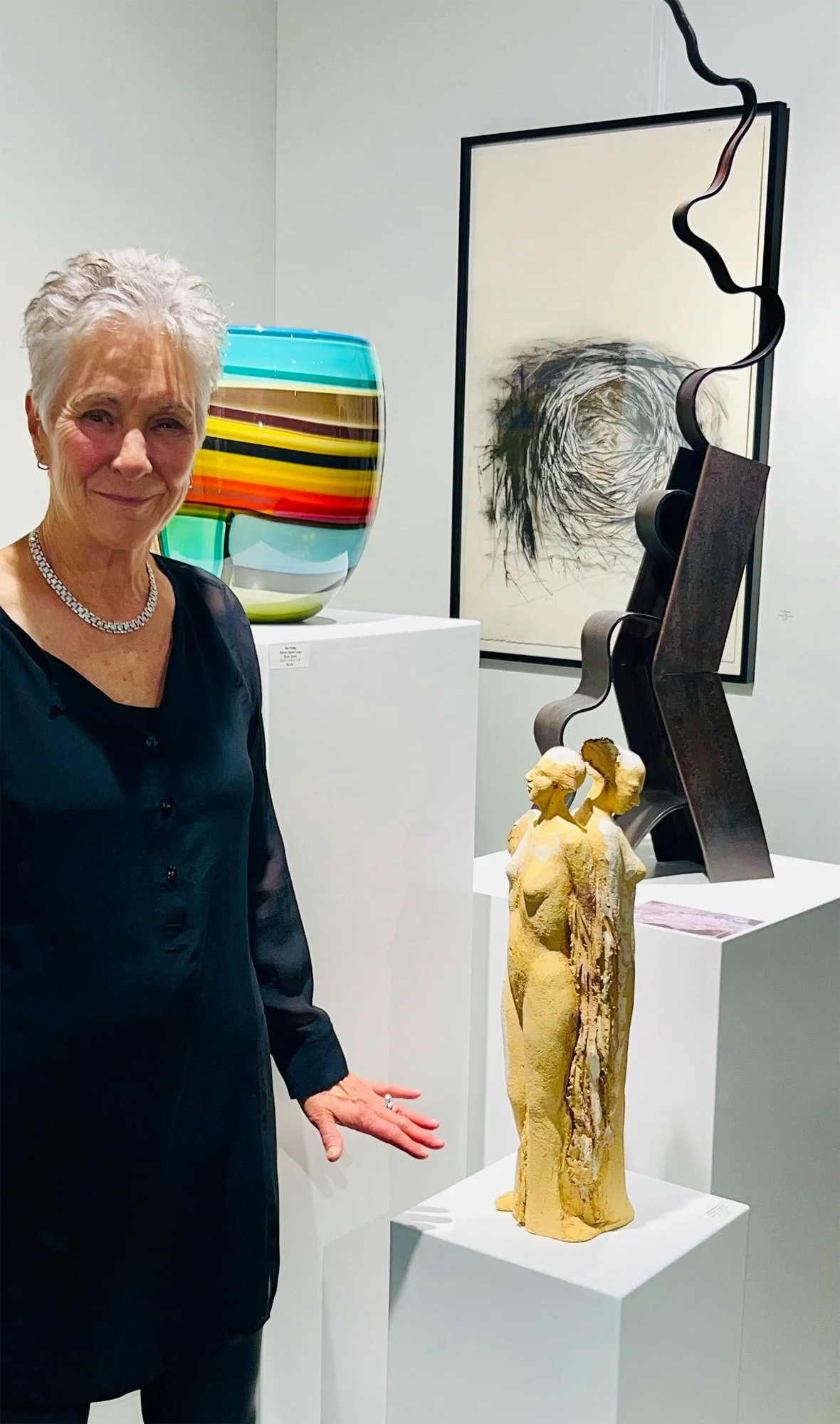
With Goodness & Beauty at the Seattle Art Fair, 2024Smith and Vallee Gallery
Biographical Information
Maria Wickwire is a sculptor based in the Skagit Valley of northern Washington state, specializing in contemporary figurative ceramics. She creates clay and multimedia sculptures of the female figure that express feminine emotions and archetypes, but her creative journey began long before she ever touched clay. For Maria, creativity was always an integral part of growing up; it was simply how things were done. That deeply ingrained understanding still shapes her work today, echoing a favorite personal philosophy: How you do anything is how you do everything.
As a young adult, Maria became a teacher, driven by a passion for helping young children pursue their own interests and grow into their full potential. Alongside her teaching, she continuously explored her own creative path through writing, eventually becoming an accomplished poet, and later discovering her ultimate voice in ceramic figure sculpture.
Her first experience with clay came unexpectedly in midlife, while learning to make teapots with her third-grade students. It was a true "where-have-you-been-all-my-life" moment, and she hasn't been able to put the clay down since. What began with functional forms quickly evolved into expressive figures. Much like her poems, Maria's sculptures often feel as though they "write themselves" into being. Working intuitively, she listens closely, allowing the clay to guide her toward stories that feel both deeply personal and universally shared.
Maria first established her professional art practice in Portland, Oregon. There, she exhibited her work in galleries, participated in the prestigious Portland Open Studios, created a major public art piece for the city of Lake Oswego, and was featured on the Emmy Award-winning television program Oregon Art Beat. She has since relocated to the Skagit Valley, where she continues to create, exhibit, and let the landscape inspire her studio practice.
Viewers often bring their own interpretations to Maria’s work, a process she warmly welcomes. Each unique perspective adds a kind of patina—heightening the sculpture's meaning over time. She creates from a deeply personal place, with the hope that the work will resonate just as deeply with those who encounter it.
For many years, Maria chose not to cast her work in bronze because each unique ceramic piece represented a singular journey of discovery. While that remains true, she has recently begun collaborating with a Classic Foundry in Seattle to translate selected elemental figures into permanent bronze. This evolution continues to lead her forward toward the next phase of exploration. Her sculptures, too, are ready to move out into the world—to stand on their own and offer their quiet wisdom to those who encounter them.